
Reclaiming the Narrative: Vijay Mallya’s Side of the Story

Published by Paras & Company
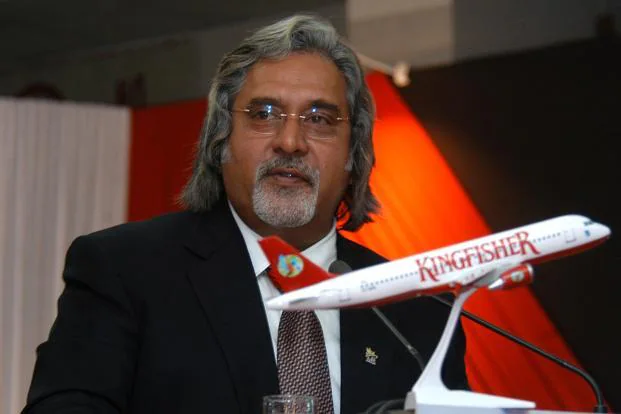
In a rare and candid interview, Indian businessman Vijay Mallya opens up about the controversies that have defined his public image over the past decade—chiefly the collapse of Kingfisher Airlines, his alleged financial misdeeds, and the media-driven portrayal that he claims reduced a once-celebrated entrepreneur to a “fugitive.”
Mallya’s version of events paints a complex picture—one shaped by government policy, macroeconomic turmoil, and a media landscape that, in his view, often prioritizes sensationalism over substance.
✈️ Government Intervention and Financial Headwinds
At the heart of Mallya’s narrative is a firm belief that Kingfisher Airlines’ failure was not merely the result of poor business decisions, but a consequence of government policy and the 2008 global financial crisis. He recalls a conversation with then-Finance Minister Pranab Mukherjee, who reportedly discouraged him from downsizing the airline—despite his concerns about rising operational costs.
Crucially, he cites two policy constraints that proved fatal:
- Aviation Turbine Fuel (ATF) was not granted “declared goods” status, inflating operational expenses.
- A prohibition on foreign direct investment (FDI) in aviation restricted his ability to raise capital.
In Mallya’s eyes, these structural issues—compounded by the broader global downturn—created a “perfect storm” from which the airline could not recover.
💰 The Disputed Loan Recovery
One of the most critical revelations is the Indian government’s official acknowledgment of recovering ₹14,100 crores from Mallya—far exceeding the original ₹4,999 crore debt judgment related to Kingfisher Airlines.
This figure, he argues, directly challenges the long-standing media narrative that painted him as a “chore” (thief) who defrauded Indian banks. He claims this fact has been underreported, feeding into a biased public perception and legal interpretation.
👨💼 The Business of Brand Building
Long before Kingfisher Airlines, Mallya had already proven his marketing acumen with the transformation of Kingfisher beer into India’s leading alcohol brand. Operating within a “media dark” regulatory environment, he pioneered surrogate advertising, launching a water brand to advertise beer indirectly and leveraging lifestyle events to cement a “fun and aspirational” image.
His strategic thinking extended to acquisitions during volatile times. When Prime Minister Morarji Desai’s call for national prohibition tanked alcohol stocks, Mallya’s father seized the opportunity—betting against prohibition and winning big. These stories underscore the Mallya family’s risk-taking mindset and contrarian investment instincts.
🚀 Kingfisher Airlines: Vision Beyond Vanity
Mallya is adamant that Kingfisher Airlines was not a vanity project. He explains the idea originated from a pitch by the Damana brothers, and that he sought to deliver a premium flying experience in India, not simply another low-cost carrier.
He introduced innovations such as:
- Inflight entertainment screens for every passenger,
- Complimentary meals, and
- A luxury business class product (Kingfisher First).
Regarding the acquisition of Air Deccan, Mallya refutes the popular belief that it was aimed solely at securing international routes. Instead, he frames it as a strategic consolidation move to remove a market disruptor and benefit from aircraft commonality—standard practices in competitive industries.
🏏 Sports Investments as Business Strategy
Far from being extravagant indulgences, Mallya claims his high-profile sports ventures—like Royal Challengers Bangalore (RCB) and Force India Formula 1—were calculated marketing tools.
- RCB served as a promotional platform for Royal Challenge whiskey.
- The IPL model itself, he points out, proved profitable within two years.
- His acquisition of Force India aimed to plant the Indian flag on the global motorsport map, enhancing his brand’s international recognition.
He even credits himself for spotting Virat Kohli’s talent early and signing him to RCB—another business-savvy decision with lasting impact.
🏡 Wealth, Lifestyle & Media Exaggerations
Challenging the persistent media narrative of excess, Mallya provides a different lens on his wealth and lifestyle. He explains that:
- His car collection reflects a personal passion for vintage restoration, not extravagance.
- His bungalow atop Kingfisher Towers in Bangalore serves as a symbolic and practical business address.
- Most of his assets were either earned independently or managed through family trusts, and not drawn from public or bank funds.
🗣️ Media Narratives vs. Reality
One of the strongest undercurrents in the interview is Mallya’s critique of traditional media, which he accuses of orchestrating a “relentless and vicious trial by media.” He believes sensational headlines overtook factual reporting, and that this misrepresentation significantly impacted his legal and public standing.
By choosing a podcast—a “new media” platform—to break nearly a decade of silence, Mallya signals a strategic shift in communication: speak directly to the public, bypass traditional gatekeepers, and reclaim the narrative.
Key Takeaways for Business Leaders
- Macroeconomic and policy factors can derail even well-intentioned ventures. Mallya’s case is a stark reminder that success in capital-heavy industries like aviation requires more than vision—it demands policy alignment and external stability.
- Brand image and business strategy are increasingly intertwined. Mallya’s flamboyant persona wasn’t just for show—it served as a brand extension for Kingfisher, showcasing the blurred lines between personal branding and corporate growth.
- Challenging public perception requires data, not drama. By pointing to verifiable figures (e.g., the ₹14,100 crore recovery), Mallya invites a re-examination of his case—one that may resonate in the court of public opinion, if not yet the legal system.
- Surrogate innovation can thrive in regulated sectors. His strategies in the alcohol industry offer a playbook for businesses operating under heavy compliance restrictions.
Final Thoughts
Vijay Mallya’s interview is not a plea for sympathy—it is a strategic assertion of control over his narrative. Whether one views him as a misunderstood entrepreneur or a reckless risk-taker, his story provides valuable lessons on brand building, regulatory navigation, and the profound influence of media on legacy.
As India continues to debate the role of public figures in finance and entrepreneurship, Mallya’s journey underscores the importance of context, complexity, and clarity—in business, in governance, and in the stories we choose to believe.
By Paras & Company
Advisors in Strategy, Growth & Transactions
Your audience, your profits—become an affiliate today! https://shorturl.fm/8jcgs
Earn passive income this month—become an affiliate partner and get paid! https://shorturl.fm/7h7KO
Sign up for our affiliate program and watch your earnings grow! https://shorturl.fm/H9sL9
Promote our products—get paid for every sale you generate! https://shorturl.fm/Mii1q
Start earning every time someone clicks—join now! https://shorturl.fm/RFEjH
https://shorturl.fm/n1g2m
https://shorturl.fm/kJpQJ
https://shorturl.fm/YXTi6
https://shorturl.fm/6egiW
https://shorturl.fm/WtOGJ
https://shorturl.fm/Uo9Z5
https://shorturl.fm/uIAle
https://shorturl.fm/qNNqJ
https://shorturl.fm/DF8OI
https://shorturl.fm/2QyW3
https://shorturl.fm/vISGk
https://shorturl.fm/513KT
https://shorturl.fm/PZfQQ
https://shorturl.fm/fgS8g
https://shorturl.fm/a8XEr
https://shorturl.fm/eBjdV
https://shorturl.fm/iMXdm